Does Vaseline Expire? How Long It Really Lasts and How to Tell
Almost every household has a jar of Vaseline (petroleum jelly) tucked away in a medicine cabinet or drawer. Whether you use it for dry lips, skin slugging, minor cuts, or moisturizing cracked heels, a single jar can last for years.
Because it retains its texture and texture-less property for a very long time, it begs the question: Does Vaseline actually have an expiry date, or does it last forever?
In this comprehensive guide, we will break down the scientific stability of petroleum jelly, look into the official expiration guidelines, identify the risks of using expired product, and provide clear methods to check if your jar is still safe to use.
The Short Answer: Does Vaseline Expire?
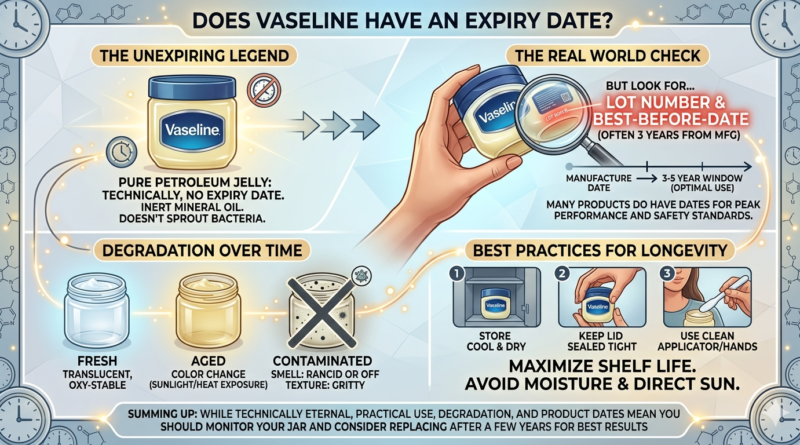
Yes, Vaseline does expire, but its shelf life is exceptionally long compared to other skincare cosmetics.
Technically, pure petroleum jelly is an incredibly stable hydrocarbon compound derived from oil refining. It contains no water, meaning it does not naturally create an environment where bacteria, mold, or fungi can easily breed. However, over a long period, its structural composition breaks down, losing its clinical effectiveness and moisture-locking capabilities.
How Long Does a Jar of Vaseline Last?
The true lifespan of your Vaseline depends largely on whether you look at the manufacturer’s official stamped date or its raw chemical endurance:
- Official Shelf Life (The Stamped Date): Most official jars of Unilever Vaseline come stamped with a specific expiration date, which is typically 3 years (36 months) from the date of manufacture.
- The Practical Lifespan: In real-world conditions, an unopened jar stored in a cool, dark environment can easily remain chemically stable and perfectly functional for 5 to 10 years.
3 Signs That Your Vaseline Has Gone Bad
While it rarely molds or rots, old petroleum jelly undergoes physical and chemical changes. If you notice any of the following signs, it’s time to throw the jar away:
1. Changes in Smell
Pure Vaseline is completely odorless. If your jar starts to emit a stale, sour, sharp, or distinctly chemical aroma, the hydrocarbons have oxidized due to air exposure.
2. Altered Texture and Consistency
Fresh petroleum jelly is smooth, thick, and spreads evenly. If your old jar looks cloudy, has separated into liquid oil and thick chunks, or feels excessively thin and runny, the emulsion has broken down permanently.
3. Discoloration
Vaseline should look translucent or have a very slight, uniform off-white/yellowish tint. If you notice dark yellow spots, brown hues, or any speck of discoloration, external contaminants have compromised the product.
The Real Health Risks of Using Expired Vaseline
Using expired pure petroleum jelly on regular, intact body skin is rarely dangerous, but it can pose significant issues in specific skincare routines:
- Bacterial Contamination (The Double-Dipping Danger): Every time you stick your fingers into a Vaseline tub, you introduce skin cells, oils, and bacteria into the container. Over the years, these accumulate. Applying contaminated product to open cuts, chapped lips, or a compromised skin barrier can lead to localized skin infections.
- Clogged Pores and Acne: As petroleum jelly degrades and mixes with trapped airborne dust or skin bacteria, it turns from a non-comedogenic shield into a pore-clogging paste, triggering severe breakouts.
- Loss of Efficacy: The primary function of Vaseline is transepidermal water loss protection (locking in skin moisture). Expired jelly loses its occlusive structural capacity, meaning it won’t soothe your dry skin or heal minor wounds effectively anymore.
Frequently Asked Questions (FAQs)
Q1: Can I use expired Vaseline on my lips?
It is not recommended. Your lips are highly sensitive, and you accidentally ingest small amounts of lip products throughout the day. If the Vaseline is expired or heavily contaminated from years of finger-dipping, it can harbor bacteria that lead to lip irritation, cheilitis, or unwanted breakouts around the mouth.
Q2: What happens if Vaseline doesn’t have an expiration date printed?
If your tub doesn’t have a visible expiry date (or it has rubbed off), look for the PAO (Period After Opening) symbol—a tiny graphic of an open jar on the back label. It usually has a number like 24M or 36M, indicating it is safe to use for 24 or 36 months after you first open the lid.
Q3: Does Vaseline expire if it is unopened?
Unopened Vaseline is highly protected because it hasn’t been exposed to air, moisture, or human touch. While manufacturers still recommend adhering to the 3-year stamped date, an unopened jar can easily remain stable and safe for up to a decade if kept away from direct heat and sunlight.
Q4: Can expired Vaseline cause a skin rash?
Yes. If the product has oxidized or collected dust and environmental bacteria over several years, it can trigger contact dermatitis or localized skin irritation, particularly if applied to sensitive skin profiles or open scratches.
Conclusion
While Vaseline is one of the most resilient skincare items ever created, it is not immortal. For standard everyday moisturizing on closed skin, an older jar is usually harmless. However, if your jar is several years past its official 3-year expiration mark, smells unusual, or has changed texture, it is safest to throw it away. A new jar is highly affordable and ensures your skin barrier remains fully protected and hygienic.